Mind
Chess
Last updated: 15 March 2025
How it works
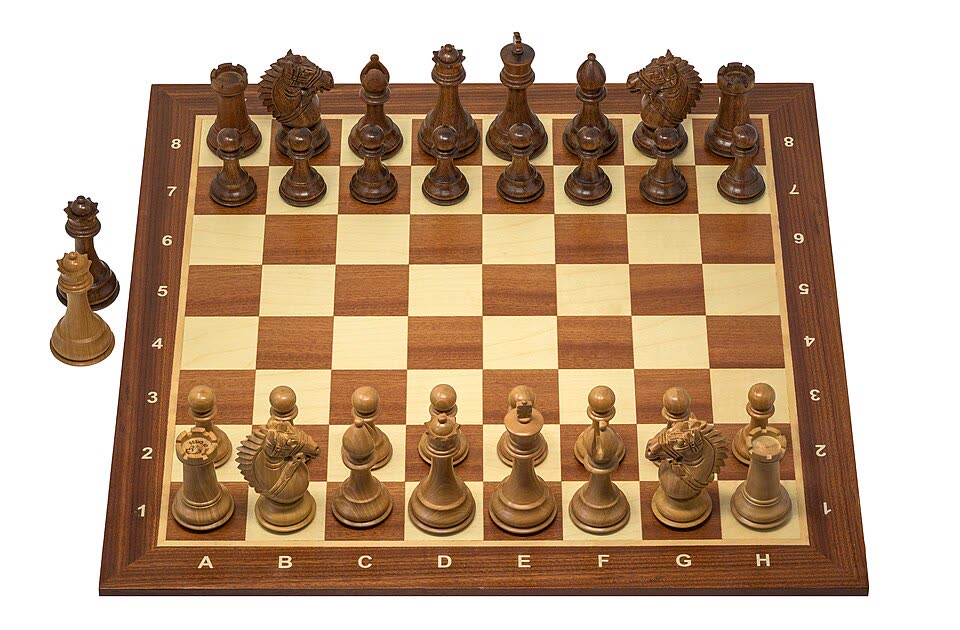
Chess is played on an 8×8 board between two players. Each side has 16 pieces: one king, one queen, two rooks, two bishops, two knights, and eight pawns. Players take turns moving one piece per turn according to specific rules for each piece type. The goal is to checkmate the opponent's king—putting it under attack with no legal escape. Games can also end in stalemate, draw by agreement, or by repetition or the fifty-move rule. Special moves include castling and en passant.[1]
How to learn
Start by learning how each piece moves and captures. The king moves one square in any direction; the queen combines rook and bishop movement; rooks move along ranks and files; bishops move diagonally; knights move in an L-shape; pawns move forward and capture diagonally. Learn basic opening principles (control the center, develop pieces, castle early) and common checkmate patterns. Practice with online platforms (Chess.com, Lichess), books, or a coach. Solve tactics puzzles daily to improve.[2]
History
Chess originated in India around the 6th century as chaturanga, a four-player game. It spread to Persia, where it became shatranj, and reached Europe via the Islamic world. The modern rules (queen and bishop power, castling, en passant) evolved in 15th-century Europe. The first official world championship was held in 1886.[3]
References
- FIDE Laws of Chess: https://www.fide.com/FIDE/handbook/LawsOfChess.pdf
- Chess.com – How to Play Chess: https://www.chess.com/learn-how-to-play-chess
- Wikipedia – History of chess: https://en.wikipedia.org/wiki/History_of_chess
Products you might need
As an Amazon Associate we earn from qualifying purchases.